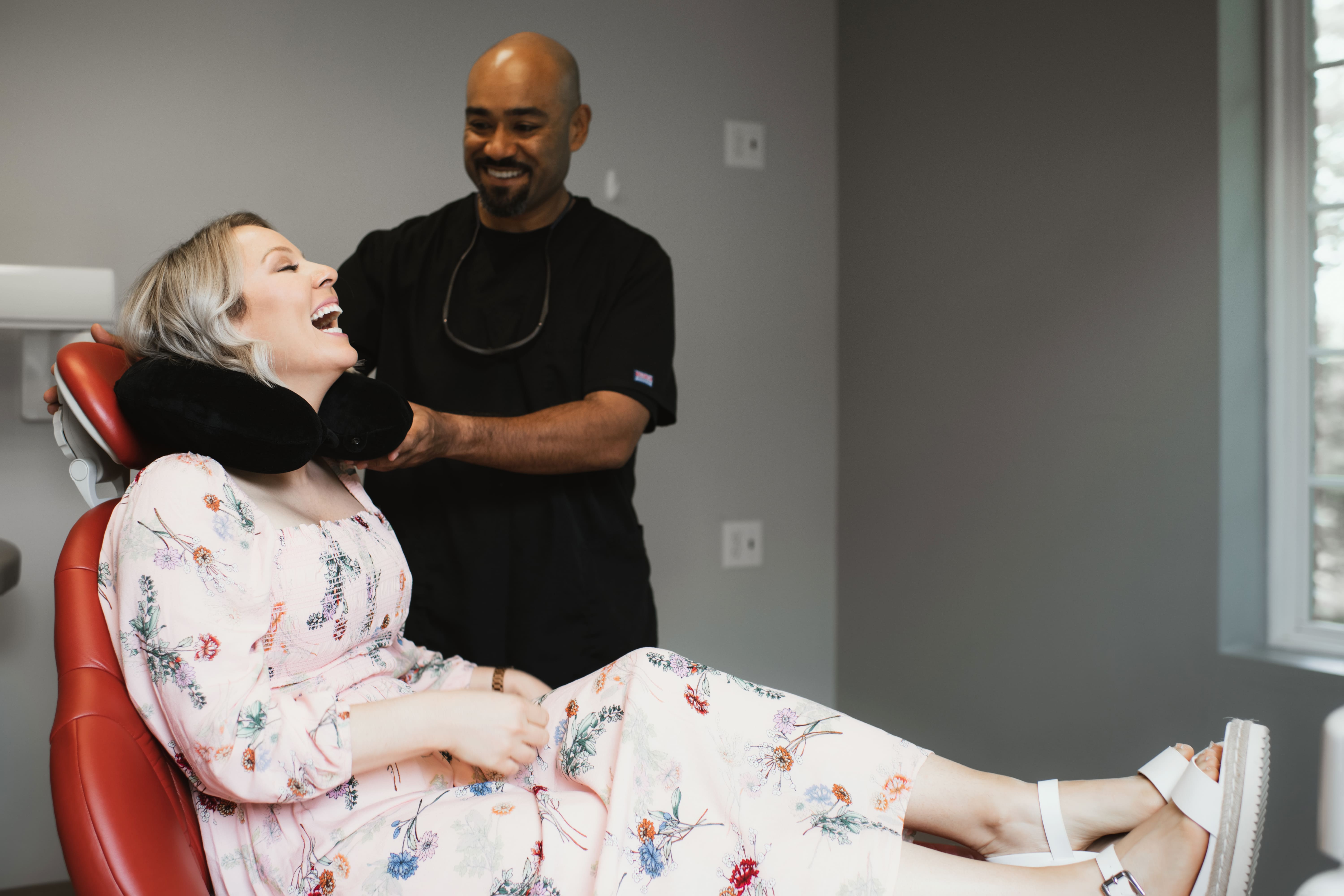
Meet Dr. Meenal Patel
Dr. Meenal H. Patel, DMD, FAGD, FICOI, is more than just a dentist; she's a Diamond Invisalign Provider and a smile architect dedicated to transforming lives. With advanced training in cosmetic dentistry and a commitment to excellence, Dr. Patel brings warmth and expertise to every patient interaction. As an award-winning dentist, she has garnered recognition for her exceptional care and dedication to the community. Join us at Preston Dental Loft and discover the difference between Dr. Patel's contagious smile and personalized approach to dentistry. Your journey to a healthier, more radiant smile starts here. Schedule your appointment today!
Introduction
Many people delay dental care because of fear. Some worry about pain. Others feel anxious about sounds, smells, or even the thought of sitting in a dental chair. Over time, this fear can lead to more serious dental problems that are harder to treat.
Sedation dentistry helps patients feel calm and comfortable during dental visits. But a common question keeps coming up: Is sedation dentistry safe? Patients want clear answers before choosing any form of sedation.
At Preston Dental Loft, patient safety always comes first. Under the care of Dr. Meenal Patel, a Diamond Invisalign Provider, sedation dentistry is approached with caution, planning, and clear communication. This blog explains how sedation dentistry works, what makes it safe, and what patients should know before choosing it.
What Is Sedation Dentistry?
Sedation dentistry uses medication to help patients relax during dental treatment. It does not always mean being asleep. In most cases, patients remain awake but feel calm, relaxed, and less aware of time or discomfort, which helps patients learn how sedation dentistry reduces dental anxiety by making dental care feel more manageable and less overwhelming.
Sedation can be helpful for patients with dental anxiety, a strong gag reflex, sensitive teeth, or difficulty sitting still during long appointments. It can also be useful for more complex procedures that take longer to complete.
The goal is not to remove all awareness, but to reduce stress so treatment feels manageable and comfortable.
Common Types of Dental Sedation
Understanding the types of sedation helps patients feel more confident about safety.
- Oral Sedation Oral sedation involves taking a prescribed pill before the appointment. This type of sedation creates a deep sense of relaxation. Patients remain awake but may feel drowsy and may not remember much of the procedure afterward, allowing patients to explore sedation options that make dental care stress-free and more comfortable.
Oral sedation is commonly used for moderate anxiety and longer procedures.
- Inhalation Sedation Often called laughing gas, inhalation sedation is delivered through a small mask placed over the nose. It works quickly and wears off quickly.
Patients remain awake and responsive but feel calmer and less anxious. This option is often used for mild anxiety and shorter visits.
- IV Sedation IV sedation is delivered through a vein and allows precise control over the level of relaxation. Patients feel deeply relaxed and may drift in and out of awareness.
This type of sedation is typically used for more involved procedures or higher anxiety levels.
Is Sedation Dentistry Safe for Most Patients?
Yes, sedation dentistry is considered safe when it is properly planned and monitored. Safety depends on patient evaluation, medication selection, dosage control, and continuous monitoring during treatment, helping many patients overcome dental anxiety during Invisalign treatment in Cary, NC, while receiving comfortable, focused care.
Before recommending sedation, the dental team reviews the patient's medical history, medications, allergies, and past reactions to sedation. This step is essential to reduce risk.
Healthy adults generally tolerate dental sedation very well. For patients with certain medical conditions, extra precautions may be taken or alternative options discussed.
How Dentists Ensure Safety During Sedation
Sedation dentistry follows strict safety protocols.
- Detailed Medical Review Patients are asked about heart conditions, breathing issues, medications, sleep apnea, and previous experiences with anesthesia. Honest answers help prevent complications.
- Correct Dosage Sedation medications are carefully measured based on weight, health, and anxiety level. The goal is comfort without over-sedation.
- Continuous Monitoring During sedation, vital signs such as heart rate, oxygen levels, and blood pressure are closely monitored. This allows the dental team to respond quickly if adjustments are needed.
- Emergency Preparedness Dental offices offering sedation are trained and equipped to handle unexpected reactions. Emergency protocols are reviewed regularly to maintain readiness.
Who Is a Good Candidate for Sedation Dentistry?
Sedation dentistry is often recommended for patients who:
- Experience dental anxiety or fear
- Have had traumatic dental experiences in the past
- Have a strong gag reflex
- Need lengthy or complex dental procedures
- Have difficulty getting numb with local anesthesia
- Avoid dental visits due to stress
Each patient is evaluated individually to decide if sedation is appropriate and which type is safest.
Who May Need Extra Caution?
Some patients require additional evaluation before sedation:
- Those with heart or lung conditions
- Patients with sleep apnea
- Pregnant patients
- Individuals taking certain medications
- Patients with obesity or airway concerns
In these cases, sedation may still be possible but may require medical clearance or adjustments.
What Does Sedation Feel Like?
Most patients describe sedation as a feeling of calm, relaxation, and detachment from the procedure. Time often feels shorter, and anxiety fades into the background.
Some patients remember very little afterward, especially with oral or IV sedation. Others remember parts of the visit, but without distress.
Importantly, patients do not lose control. They can still respond to instructions if needed.
Common Myths About Sedation Dentistry
- Myth 1: Sedation is the same as general anesthesia Dental sedation is not the same as being fully unconscious. Most dental sedation allows patients to remain awake and breathing on their own.
- Myth 2: Sedation is risky for everyone When planned properly, sedation is very safe for most patients. Risk increases mainly when medical history is incomplete or instructions are not followed.
- Myth 3: You will not wake up Dental sedation uses low doses designed for relaxation, not deep unconsciousness. The medications are carefully controlled.
Preparation Instructions Matter
Safety does not start when the appointment begins. It starts before.
Patients are often instructed to:
- Avoid eating or drinking for a certain time before sedation
- Arrange for a responsible adult to drive them home
- Take medications exactly as prescribed
- Avoid alcohol before and after treatment
Following these instructions reduces risk and improves recovery.
What Happens After Sedation?
After sedation, patients may feel sleepy, lightheaded, or relaxed for several hours. This is normal.
Patients are advised to rest for the remainder of the day. Driving, working, or making important decisions should be avoided until the effects fully wear off.
Most patients feel back to normal by the next day.
Long-Term Safety of Sedation Dentistry
No evidence suggests that properly administered dental sedation causes long-term harm. Sedation medications do not build up in the body when used occasionally for dental care. For patients who require sedation more than once, careful review ensures continued safety, allowing them to explore sedation options that make dental care stress-free rather than avoiding treatment due to fear, which often carries greater health risks than sedation itself.
Sedation Dentistry and Trust
Safety is not just about medication. It is also about trust and communication.
Patients should feel comfortable asking questions, sharing concerns, and understanding why sedation is recommended. A dentist who explains options clearly and respects patient comfort creates a safer experience.
At Preston Dental Loft, Dr. Meenal Patel focuses on patient education, gentle care, and thoughtful treatment planning so patients never feel rushed or pressured.
Why Experience Matters
Dentist experience plays a major role in sedation safety. Knowing when sedation is helpful, when it is unnecessary, and how to adjust care for each patient makes a difference.
Dr. Meenal Patel's background as a Diamond Invisalign Provider reflects her commitment to precision, planning, and patient-centered care. The same attention applies to sedation dentistry.
FAQ's
1 Is sedation dentistry safe for older adults?
Yes, sedation can be safe for older adults when medical history is carefully reviewed, and dosages are adjusted appropriately.
2 Will I be asleep during sedation dentistry?
Most patients remain awake but deeply relaxed. Full unconsciousness is uncommon during dental sedation.
3 Can I eat before sedation dentistry?
Patients are usually asked not to eat or drink for several hours before sedation. Your dentist will provide specific instructions.
Conclusion
Sedation dentistry is a safe and effective option for patients who feel anxious or uncomfortable during dental visits. Find out how Preston Dental Loft eases dental fears with sedation when it is carefully planned and properly monitored, allowing patients to receive the care they need without worry.
Understanding how sedation works, who it is for, and how safety is maintained helps patients make informed decisions. Avoiding dental care due to fear can lead to bigger health problems, while sedation offers a supportive path forward.
With the right approach and experienced guidance, sedation dentistry can turn stressful visits into manageable ones.
Remember
Sedation dentistry is designed to support comfort, not replace awareness. Following pre- and post-care instructions plays a big role in safety.
Disclaimer
This blog is for informational purposes only and does not replace professional medical advice. Always consult your dentist to determine whether sedation dentistry is right for your individual health needs.


