Quick answer
Laser dentistry uses focused light energy to treat gum tissue and some cavities with less bleeding and often less need for numbing. At the same time, traditional tools like drills and scalpels remain the more versatile, time-tested option for many procedures. The right choice depends on the specific treatment, not one being universally better.
Key takeaways
- Lasers can mean less bleeding, less swelling, and sometimes no need for a shot in soft-tissue and select cavity work.
- Traditional drills and instruments still handle the widest range of procedures and remain the gold standard for many restorations.
- Not every case is a good fit for a laser, and not every dentist offers one, which is why an honest exam matters most.
- Cost, insurance coverage, and your overall smile goals all factor into the decision.
- The best plan often combines modern and traditional methods based on your needs.
Laser Dentistry vs. Traditional Treatments: The Quick Answer
Neither laser dentistry nor traditional treatment is best for everything. Lasers use a concentrated beam of light energy to treat gum tissue and some forms of tooth decay, often with less bleeding and sometimes without a numbing shot. Traditional tools like drills, scalpels, and hand instruments remain the most versatile and proven approach for a wide range of dental work. The smartest choice depends on the exact procedure you need and your individual mouth. At Preston Dental Loft in Cary, we consider each patient's situation before recommending one method over another. What follows is a plain-language guide to help you understand your options.
What laser dentistry does differently
Laser dentistry replaces some cutting and drilling with focused light. For gum treatment, this can mean trimming or reshaping tissue with less bleeding and swelling. For certain early cavities, a laser can remove decay while leaving more healthy tooth intact. Many patients appreciate the quieter experience and the reduced need for stitches after soft-tissue work.
When traditional tools are still the better choice
Traditional instruments win when a case calls for speed, versatility, or work that a laser simply cannot do well. Deep decay, larger fillings, crown preparation, and many surgical needs are still best handled with time-tested drills and hand tools. A conventional drill removes decay quickly and precisely, and dentists have decades of predictable results behind these methods.
What Is Laser Dentistry?
Laser dentistry is the use of a device that delivers a narrow, concentrated beam of light energy to treat teeth or gums. The energy can remove or reshape tissue, help clean areas affected by gum disease, and address some tooth decay. It has been part of dental care for years and continues to grow in use.
How dental lasers work
A dental laser directs light at a very specific spot to do a specific job. Depending on the type, it can gently remove diseased gum tissue, help a wound heal, or take away a small amount of decay. Because the beam is so precise, it can often treat the problem area while sparing nearby healthy tissue.
Hard-tissue vs. soft-tissue lasers
There are two broad families of dental lasers. Soft-tissue lasers work on the gums and are commonly used for gum reshaping and gum disease care. Hard-tissue lasers are designed to work on the tooth itself and can be used for some cavity treatment. Many practices that offer lasers focus on soft-tissue uses because that is where the everyday benefits are clearest.
FDA clearance and safety oversight
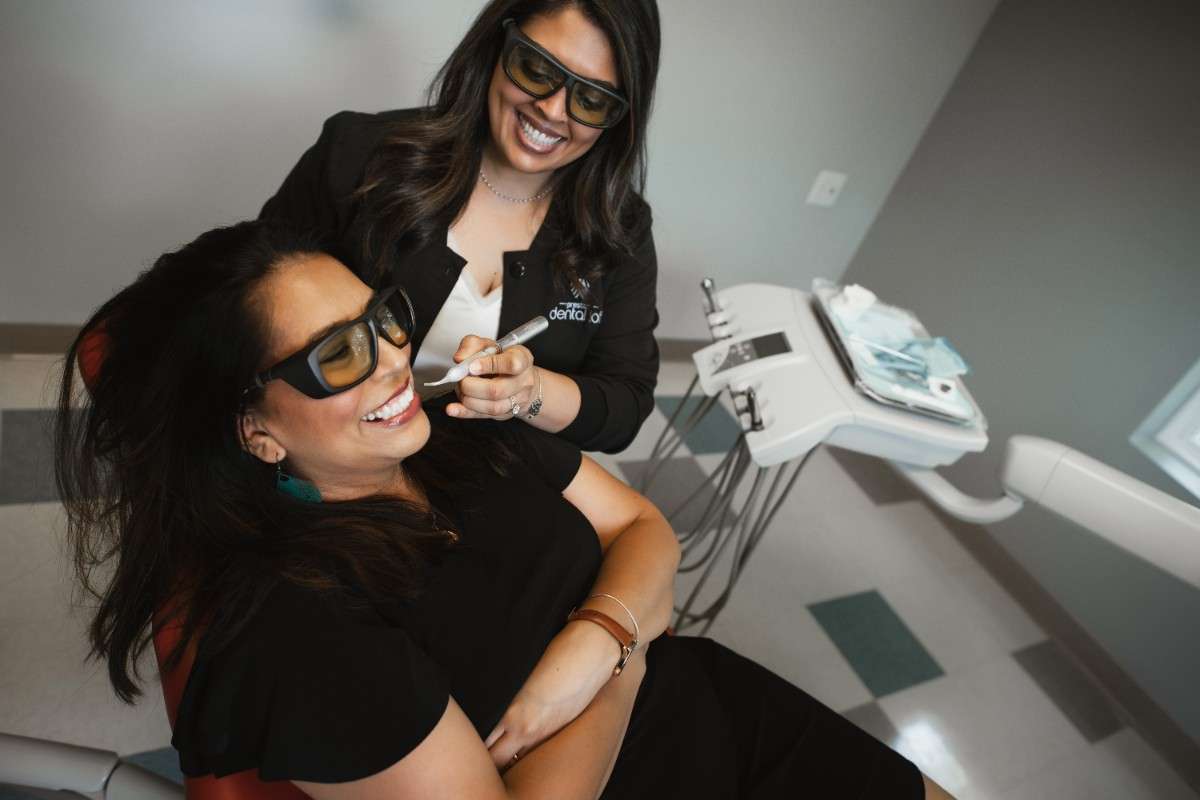
Dental lasers used in the United States are reviewed and cleared by the U.S. Food and Drug Administration before they can be sold and used on patients. Explore the FDA clearance record for a dental laser. That oversight is one reason lasers can be a safe option in trained hands. Still, safety depends on proper training and choosing the right tool for the right case. Protective eyewear is worn during treatment, and your dentist should explain what to expect beforehand.
How Traditional Dental Treatments Compare
Traditional dentistry relies on drills, scalpels, and hand instruments that have been refined over generations. These tools remain the backbone of modern care because they are fast, dependable, and capable of handling nearly any situation that walks through the door.
Drills, scalpels, and manual instruments
A dental drill quickly and precisely removes decay and shapes teeth for fillings and crowns. Scalpels and other surgical instruments allow careful, controlled work during procedures a laser is not suited for. Hand instruments let a hygienist or dentist feel and remove buildup that a machine may miss. These tools are also more affordable to own, which keeps care accessible.
Proven track record and versatility
The biggest strength of traditional care is its versatility and long track record. From simple fillings to complex extractions, conventional methods have delivered predictable outcomes for decades. Dentists everywhere are trained on these tools, so you can expect consistent quality no matter where you go. As the profession explores newer technology, the American Dental Association continues to note that digital and modern tools work best alongside proven fundamentals, not as a replacement for them. Read more on ADA on modern dentistry.
Comparing Laser and Traditional Care by Procedure
The best way to compare the two is by the actual job you need done. Below is a simple breakdown of common procedures and how each approach performs.
| Procedure | Laser approach | Traditional approach |
|---|---|---|
| Early, small cavity | Can remove decay, sometimes without a shot | Reliable and fast for all sizes |
| Larger cavity or crown prep | Usually not ideal | Preferred and predictable |
| Gum reshaping | Less bleeding, often no stitches | Effective but more bleeding |
| Gum disease cleaning | Can support deep cleaning | Standard scaling remains essential |
Treating cavities and dental decay
For small, early cavities, a laser may remove decay while sparing more of the healthy tooth, and some patients avoid a numbing shot. For larger or deeper decay, the traditional drill is faster and more dependable. Because tooth decay is one of the most common health conditions worldwide, catching it early gives you more treatment options, either way. Explore more here about the background on dental decay. Regular checkups make early, gentler treatment possible.
Gum and periodontal treatment
Gum care is where lasers most often shine. Laser gum treatment can remove diseased tissue and help clean pockets with less bleeding and swelling than a scalpel, and many patients heal comfortably. Research reviews describe both the benefits and the limitations of using lasers in gum care, reinforcing that they work best as part of a comprehensive treatment plan rather than as a standalone cure. Traditional deep cleaning is still a core part of managing gum disease.
Comfort, healing time, and bleeding
Many patients report a more comfortable visit with laser soft-tissue work, less bleeding during the procedure, and quicker, easier healing afterward. That said, comfort varies from person to person, and traditional treatment can be just as comfortable when anesthesia is used well. Your dentist can walk you through what to expect for your specific procedure.
Benefits and Limitations Cary Patients Should Weigh
Every treatment has trade-offs. Here is an honest look so you can weigh the pros and cons for yourself.
Potential laser advantages
- Less bleeding during soft-tissue work
- Often no stitches needed for gum procedures
- Sometimes no numbing shot for small cavities
- Quieter, more comfortable for anxious patients
- May preserve more healthy tissue
Disadvantages to consider
- Not suitable for larger fillings or many procedures
- Can add to treatment cost
- Not every dentist is trained or equipped
- Cannot fully replace drills and scalpels
- Results depend heavily on the provider's skill
Disadvantages and why not every dentist uses them
The main disadvantages of laser dentistry are cost, limited range of use, and the training required. Dental lasers are expensive to buy and maintain, so not every practice offers them. They also cannot handle the full range of everyday dental work, meaning a dentist still needs traditional tools. For these reasons, many excellent dentists rely on proven methods and add lasers only where they clearly help.
Cost and insurance considerations
Laser treatment can cost more than the traditional version of the same procedure, and coverage varies widely. Some dental plans treat both approaches the same, while others may not fully cover laser work. Before you commit, ask for a written estimate and check your benefits. Our team in Cary is happy to review your coverage and explain your options, including sedation choices for anxious patients through our general and sedation dentistry services.
How This Connects to Your Overall Smile Goals
Whether you choose laser or traditional treatment, the goal is the same: a healthy, comfortable, confident smile. The right method is the one that fits your specific needs, budget, and comfort level, and often that means combining approaches.
Combining modern treatment with clear aligners
Healthy gums and teeth are the foundation for cosmetic goals like straightening your smile. Once any decay or gum concerns are addressed, many Cary patients move on to clear aligner treatment with Invisalign to discreetly align their teeth. Preston Dental Loft has been recognized as a Diamond Invisalign Provider so that we can guide you from foundational care to a finished smile.
When to talk with your Cary dentist
The best time to ask about laser versus traditional care is before any procedure, during your exam. Bring your questions, share your concerns about comfort or cost, and ask which approach your dentist recommends and why. A trustworthy dentist will explain the reasoning behind the plan and never push a technology just because it exists.
Find us
Preston Dental Loft is located in Cary, NC. Call us at 919-467-6111 to schedule a consultation and talk through your treatment options in person. For directions, use this helpful Google Maps link or get step-by-step navigation via Get Directions. Preston Dental Loft also provides Invisalign treatment. Schedule an appointment to learn more.
Frequently Asked Questions
The main disadvantages are higher cost, limited range of use, and the need for specialized training. Lasers cannot handle many common procedures, such as larger fillings or crown preparation, so a dentist still needs traditional tools. Because the equipment is expensive, not every practice offers it, and results depend heavily on the provider's skill.
The 3-3-3 idea is a simple memory aid some people use for oral care: brush for about 3 minutes, brush about 3 times a day around meals, and replace your toothbrush about every 3 months. It is a general guideline, not a strict medical rule, so follow the personalized advice your dentist gives you at your checkups.
Many dentists do not use lasers because the equipment is costly, requires extra training, and cannot replace traditional tools for most procedures. Since drills and hand instruments are versatile, fast, and proven, many excellent dentists provide great care without a laser and add one only where it clearly benefits patients.
Gum tissue that has been intentionally removed or reshaped with a laser generally does not grow back to its exact prior form, which is often the goal of the treatment. Healthy healing does occur, and your gums firm up as they recover. If you have concerns about gum recession or reshaping, ask your Cary dentist what to expect for your specific case.
Meet Dr. Meenal Patel
Dr. Meenal H. Patel, DMD, FAGD, FICOI, is more than just a dentist; she's a Diamond Invisalign Provider and a smile architect dedicated to transforming lives. With advanced training in cosmetic dentistry and a commitment to excellence, Dr. Patel brings warmth and expertise to every patient interaction. As an award-winning dentist, she has garnered recognition for her exceptional care and dedication to the community. Join us at Preston Dental Loft and discover the difference between Dr. Patel's contagious smile and personalized approach to dentistry. Your journey to a healthier, more radiant smile starts here. Schedule your appointment today!
Remember: Laser dentistry and traditional treatments both have important benefits, but the right choice depends on your specific dental needs, comfort, and treatment goals. A professional dental examination is the best way to determine which approach is most suitable for you.
Disclaimer: This article is intended for general educational purposes only and should not replace professional dental advice, diagnosis, or treatment. Always consult a qualified dentist before making decisions about your oral health or dental care.


